

‘The Goal of Modern Geography Is To Digitise Expert Knowledge and Integrate It with Big Data’


-min.jpg)

The importance of geographical science is increasing, as is the demand for education in this field. Since 2020, application numbers for Bachelor’s programmes at HSE University’s Faculty of Geography and Geoinformation Technology have climbed by 30%, while interest in Master’s programmes has also expanded, with applications up 10–15%. Nikolay Kurichev, Dean of the Faculty, spoke about this at a press conference hosted by MIA Rossiya Segodnya.
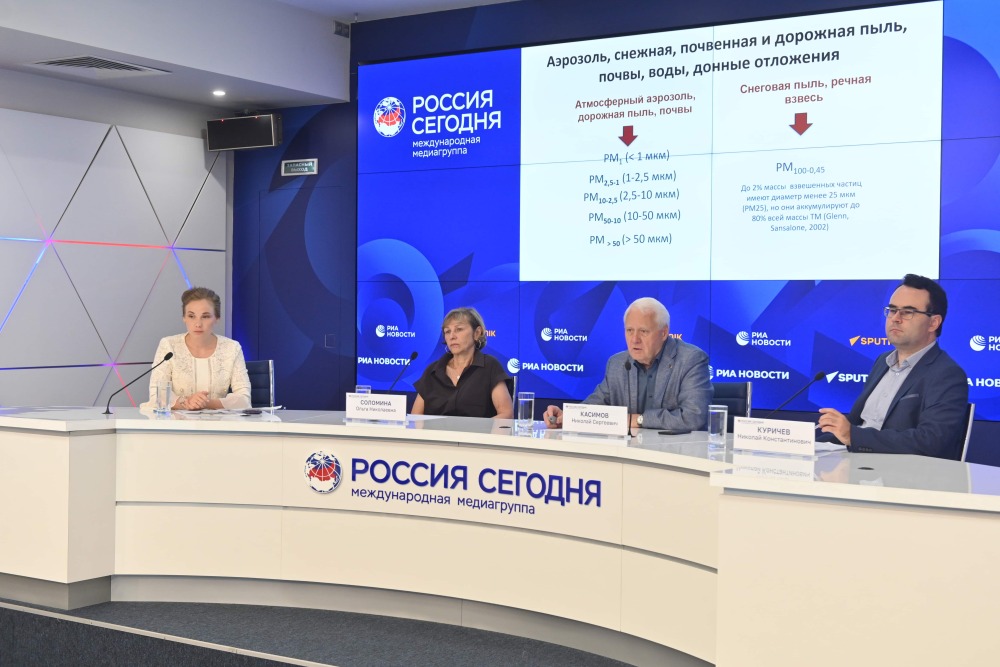
On August 15, 2025, a press conference on ‘The Geography of the New Generation: Strategic Prospects’ was held at the MIA Rossiya Segodnya press centre. The event was timed to coincide with Geographers’ Day, a professional holiday celebrated in Russia on August 18.
The event was attended by Nikolay Kasimov, First Vice-President of the Russian Geographical Society, President of the Geography Faculty at Lomonosov Moscow State University, and academician of the Russian Academy of Sciences, Olga Solomina, Director of the Institute of Geography of the Russian Academy of Sciences, Head of the Joint Department at the Faculty of Geography and Geoinformation Technology of HSE University and corresponding member of the Russian Academy of Sciences, and Nikolay Kurichev, Dean of the Faculty of Geography and Geoinformation Technology at HSE University. The participants discussed how modern geography is being transformed, and what challenges and opportunities the industry is facing in the context of digitalisation, the development of artificial intelligence, and climate change.
Nikolay Kasimov welcomed the audience and congratulated his colleagues on Geographers’ Day. He emphasised the significance of this holiday for the global community and discussed the environmental challenges of geography, particularly urban pollution.

President of the Geography Faculty at Lomonosov Moscow State University
‘The most important thing to solve environmental problems is measurement, more measurement, and even more measurement. We need to delve deeper into the microcosm to accurately identify pollutants and their range.’
He also referred to statistics from studies on road dust in Moscow, which is one of the major sources of pollution, especially in spring.
Olga Solomina discussed modern research tools such as remote sensing, mathematical modelling, and big data analysis.
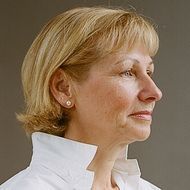
Academic Supervisor of the Faculty of Geography and Geoinformation Technology
‘Today, cartography has evolved beyond simply being a map on paper. Now it includes the use of streaming data, three-dimensional images, as well as highly detailed and accurate measurements of objects in motion and space. These new technologies distinguish modern geography from the past. Nowadays, we have access to new tools like space imagery, drones, thermal imagers, and multispectral imaging to aid in studying our natural and social environments.’
Olga Solomina noted that climate change is one of the main challenges for modern geographers. She paid special attention to the study of glaciers, which are rapidly shrinking, as well as the effects of melting permafrost on the landscape transformation.
Nikolay Kurichev, in his speech, emphasised the practical significance of geographical science and its role in addressing pressing issues. Dean of HSE University’s Faculty of Geography discussed topics such as assessing natural and climate risks, selecting effective adaptation measures, developing digital solutions for environmental and climate projects, and managing territories using big data. All of these areas of research are conducted at HSE University’s Faculty of Geography and Geoinformation Technology.
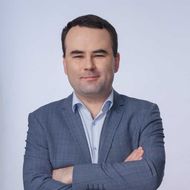
Dean of the Faculty of Geography and Geoinformation Technology
‘There has been a revolution in the field of remote sensing worldwide. Using remote sensing technologies, we can create tools for automatic data analysis and geoanalytics, allowing us to make informed decisions. However, such decisions cannot be based solely on technical grounds—profound expertise is essential. The goal of modern geography is to translate this expert knowledge into a digital format and integrate it with big data through AI-powered geographic tools. Such solutions are essential for businesses, governments, and society as a whole.’
Nikolay Kurichev shared the success of HSE University’s Faculty of Geography in its 2025 admission campaign. Interest in the discipline grew significantly, with applications to the Bachelor’s programme rising by 30% and the passing score jumping by 20 points compared to previous years. As for the Master’s programme, the number of applications for the ‘Low Carbon Development’ and ‘Spatial Data and Applied Geoanalytics’ programmes also experienced growth, with application numbers up by 10–15%.
See also:

Scientists Test Asymmetry Between Matter and Antimatter
An international team, including scientists from HSE University, has collected and analysed data from dozens of experiments on charm mixing—the process in which an unstable charm meson oscillates between its particle and antiparticle states. These oscillations were observed only four times per thousand decays, fully consistent with the predictions of the Standard Model. This indicates that no signs of new physics have yet been detected in these processes, and if unknown particles do exist, they are likely too heavy to be observed with current equipment. The paper has been published in Physical Review D.
HSE Scientists Reveal What Drives Public Trust in Science
Researchers at HSE ISSEK have analysed the level of trust in scientific knowledge in Russian society and the factors shaping attitudes and perceptions. It was found that trust in science depends more on everyday experience, social expectations, and the perceived promises of science than on objective knowledge. The article has been published in Universe of Russia.
Institute for Robotics Systems Established at HSE University
As decided by the HSE University Academic Council, a new Institute for Robotics Systems will be established at HSE, and with a strong fundamental base. It will cooperate with relevant departments across the university and engage students and doctoral candidates in research and development (R&D). First Vice Rector of HSE University and Director of the Institute for Statistical Studies and Economics of Knowledge, Leonid Gokhberg, discussed the expected practical results and the framework for cooperation with an industrial partner.
HSE Tops Ranking of Universities Participating in Priority 2030 Programme
The Russian Ministry of Science and Higher Education has published an updated list of participants in the Priority 2030 programme. A total of 106 universities will receive support this year. HSE University was included in the first group and topped the ranking.
HSE Psycholinguists Launch Digital Tool to Spot Dyslexia in Children
Specialists from HSE University's Centre for Language and Brain have introduced LexiMetr, a new digital tool for diagnosing dyslexia in primary school students. This is the first standardised application in Russia that enables fast and reliable assessment of children’s reading skills to identify dyslexia or the risk of developing it. The application is available on the RuStore platform and runs on Android tablets.
HSE Scientists Optimise Training of Generative Flow Networks
Researchers at the HSE Faculty of Computer Science have optimised the training method for generative flow neural networks to handle unstructured tasks, which could make the search for new drugs more efficient. The results of their work were presented at ICLR 2025, one of the world’s leading conferences on machine learning. The paper is available at Arxiv.org.
Physicists Propose New Mechanism to Enhance Superconductivity with 'Quantum Glue'
A team of researchers, including scientists from HSE MIEM, has demonstrated that defects in a material can enhance, rather than hinder, superconductivity. This occurs through interaction between defective and cleaner regions, which creates a 'quantum glue'—a uniform component that binds distinct superconducting regions into a single network. Calculations confirm that this mechanism could aid in developing superconductors that operate at higher temperatures. The study has been published in Communications Physics.
Neural Network Trained to Predict Crises in Russian Stock Market
Economists from HSE University have developed a neural network model that can predict the onset of a short-term stock market crisis with over 83% accuracy, one day in advance. The model performs well even on complex, imbalanced data and incorporates not only economic indicators but also investor sentiment. The paper by Tamara Teplova, Maksim Fayzulin, and Aleksei Kurkin from the Centre for Financial Research and Data Analytics at the HSE Faculty of Economic Sciences has been published in Socio-Economic Planning Sciences.
Larger Groups of Students Use AI More Effectively in Learning
Researchers at the Institute of Education and the Faculty of Economic Sciences at HSE University have studied what factors determine the success of student group projects when they are completed with the help of artificial intelligence (AI). Their findings suggest that, in addition to the knowledge level of the team members, the size of the group also plays a significant role—the larger it is, the more efficient the process becomes. The study was published in Innovations in Education and Teaching International.
New Models for Studying Diseases: From Petri Dishes to Organs-on-a-Chip
Biologists from HSE University, in collaboration with researchers from the Kulakov National Medical Research Centre for Obstetrics, Gynecology, and Perinatology, have used advanced microfluidic technologies to study preeclampsia—one of the most dangerous pregnancy complications, posing serious risks to the life and health of both mother and child. In a paper published in BioChip Journal, the researchers review modern cellular models—including advanced placenta-on-a-chip technologies—that offer deeper insights into the mechanisms of the disorder and support the development of effective treatments.